How Much?
How Much? – “…But if you buy from (business name) you can get it £5 cheaper…”
It’s a familiar phrase. One that neatly sums up something powerful happening every day in our groups.
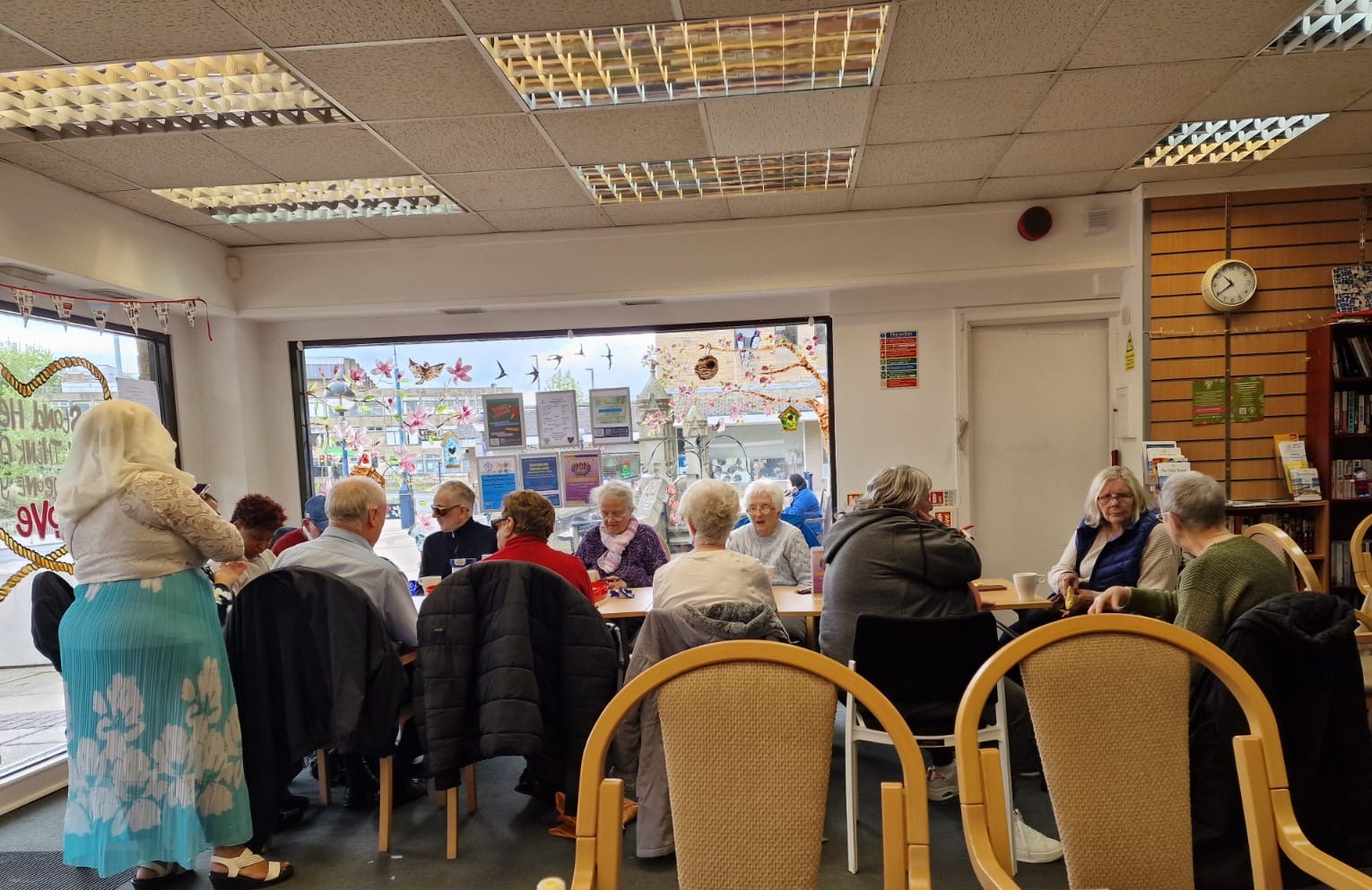
The photo shows the Outlookers Dewsbury visual impairment group gathered around a table, supporting one another during a recent session. Everyone there is living with some form or level of visual impairment – that shared experience is what brings us together. But it’s not the only thing. What really stands out is the way people support each other. Because alongside lived experience, there’s another shared trait: being money-savvy Yorkshire folk.
More Than Advice—Real, Lived Solutions
There are some fantastic organisations and businesses out there offering innovative, life-changing equipment and services for people living with sight loss. That landscape is important, and for many, those solutions are exactly what’s needed.
But step into one of our groups, and you’ll see something just as valuable happening.
People swapping ideas. Comparing notes. Sharing what actually works in real life – not just in theory. And very often, it starts with a simple question: “How much?”
The Power Behind That Question
“How much?” isn’t just about price—it’s about curiosity, confidence, and choice. It often leads to follow-up conversations like:
“You can get the same thing cheaper somewhere else.”
“I didn’t buy that—I use this instead.”
“Have you checked if there’s a free app that does it?”
“I’ve already got something at home that works just as well.”
That’s the power of peer support built on lived experience. It’s practical, honest, and grounded in real life.
Yorkshire Ingenuity in Action
There’s something special about the way Yorkshire communities approach problem-solving.
It’s not about going for the most expensive option – it’s about finding what works best, what lasts, and what represents good value. So when someone mentions a specialist product or service, it’s only natural that someone around the table will chip in with:
“But if you buy from (business name), you can get it £5 cheaper…”
Or even better:
“You might not need to buy it at all.”
That shared mindset creates a space where people feel empowered to explore alternatives -whether that’s a low-cost workaround, a free piece of technology, or simply a different way of doing things.
For many people living with visual impairment – especially those newer to it – the biggest challenge isn’t just what to use, but knowing what’s worth it.
That’s where peer groups make such a difference. They offer:
- A place to sense-check decisions before spending money
- Reassurance from people who’ve faced similar challenges
- Practical demonstrations of tools and techniques
- The confidence to question whether something is really needed
- And importantly, they remind people that living well doesn’t always mean spending more.
A Balanced Perspective
This isn’t about dismissing the brilliant work of organisations, services, and product providers. They play a vital role, and many people rely on them every day. But peer-led support adds something different. It brings context. Real-world testing. Honest feedback. And often, a more cost-effective way forward.
Come and Ask
So if you’re looking for practical, cost-effective ways to make life easier with visual impairment, why not come along to one of our groups? Bring your questions. Share your ideas. Learn from others who truly understand. And don’t be afraid to ask the question that unlocks so many conversations: “How much?” Because when lived experience and good Yorkshire sense come together, the solutions aren’t just effective – they’re often simpler, smarter, and more affordable than you might expect.
Where lived experience and good sense go hand in hand.